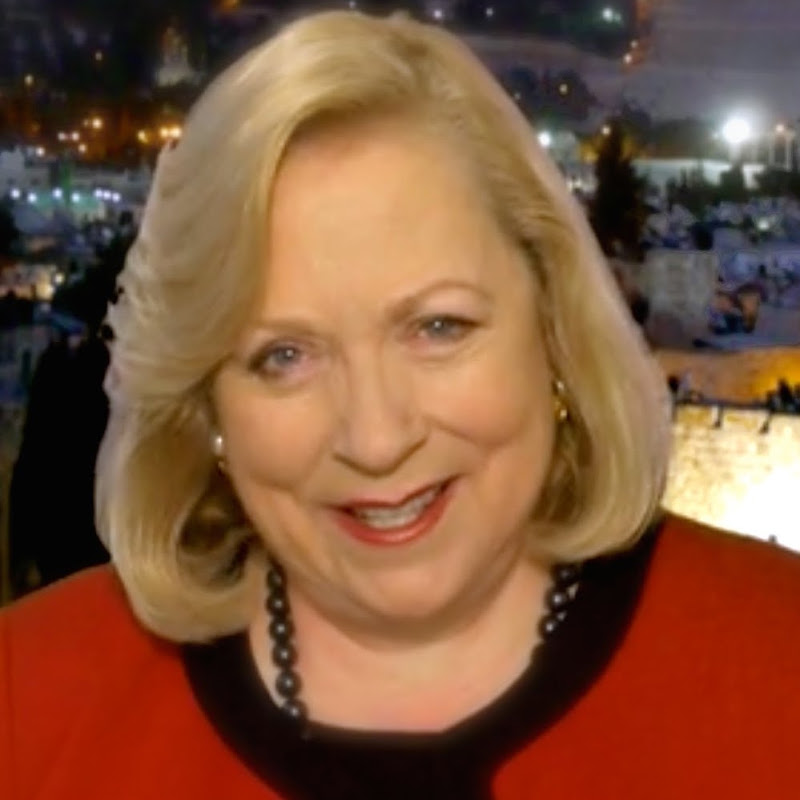
Transcript [00:01] We're presently living in a great [00:03] paradigm shift in which God is indeed [00:06] changing times and seasons. And as [00:09] believers, we're supposed to discern and [00:12] understand the times in which we live. [00:15] In Daniel 2:21, it's revealed that the [00:18] Almighty God changes times and seasons. [00:22] He deposes kings and raises up others. [00:25] He gives wisdom to the wise and [00:28] knowledge to the discerning. [00:42] Shalom. I'm Christine Dar. At the [00:45] beginning of the book of Acts, Jesus's [00:48] disciples were anxiously anticipating [00:50] the kingdom to be restored to Israel. [00:53] But instead, the day of Pentecost came, [00:57] the Holy Spirit descended upon the [00:59] disciples, which empowered them to make [01:02] disciples of all nations. After the [01:05] resurrection and ascension of Jesus, the [01:08] narrative of the early church continues [01:10] in the New Testament book called the [01:13] Acts of the Apostles. [01:15] And for the first seven chapters of the [01:17] book of Acts, all the members of the [01:19] Lord's church were Jewish. and the [01:22] apostle Simon Peter was the leader of [01:24] the church. But because most of the [01:27] Jewish nation were still not receiving [01:30] Jesus as Messiah, God put the kingdom [01:33] age on hold. And instead, by chapter 8, [01:38] Philip the evangelist was preaching in [01:41] Samaria to great crowds and to the [01:44] Ethiopian unic who was baptized on the [01:47] spot. And in chapter nine, Saul, the [01:51] persecutor of the church, was saved and [01:54] commissioned to go to the Gentiles. And [01:57] then by chapter 10 of the book of Acts, [02:00] God has sent the Apostle Peter with the [02:02] keys of the kingdom to open up the new [02:06] church age to the Gentiles. God sent [02:09] Peter on a mission to Cesaria, which was [02:12] the capital of the Roman province of [02:14] Judea, to the home of a God-fearing [02:18] Roman centurion named Cornelius, who [02:21] always prayed and gave alms. [02:24] In a vision, Cornelius had been [02:26] instructed by an angel to send for the [02:29] Apostle Peter, who was at the time in [02:32] Jaffa. [02:34] In preparation to meet Cornelius, Peter [02:37] also had a vision. He saw unclean [02:40] animals being lowered from heaven in a [02:43] sheet. And a voice commanded Peter to [02:46] eat those animals. And when he objected [02:50] because those animals were unclean [02:52] according to Mosaic law, the voice told [02:55] him not to call unclean that which God [02:58] had cleansed. [03:00] Talk about a paradigm shift. Next, Peter [03:04] was instructed by God to go to the home [03:06] of Cornelius. [03:09] Imagine how strange this was for Simon [03:11] Peter because he had never previously [03:14] visited the home of a gentile. They were [03:17] ritually unclean in his mind. [03:20] Nevertheless, he obeyed and he preached [03:22] Messiah in Cornelius's home and the Holy [03:26] Spirit fell on everybody there and they [03:29] even began to speak in tongues. In a [03:32] sense, it was the Gentiles Pentecost. [03:36] So Peter commanded them all to be [03:38] baptized. [03:40] And so there was in Acts chapter 10 at [03:43] Cornelius's house a great transition, a [03:48] great paradigm shift. Even in the [03:50] previous chapter in Acts nine, the risen [03:53] Lord Jesus had already appeared to Saul [03:55] of Tarsus, the church's persecutor on [03:58] the road to Damascus, and had commission [04:01] him to preach to the Gentiles. [04:03] So, Rabbi Saul became the Apostle Paul, [04:08] the leader of the church age. The great [04:11] transition had occurred. A new [04:13] dispensation had begun. God began to [04:17] save the Gentiles, bringing both Jews [04:20] and Gentiles together into the church as [04:23] one body, one new man in the earth. And [04:27] by the time we reach Acts chapter 15, [04:30] the very real controversy of gentile [04:32] converts is resolved at the first church [04:36] council in Jerusalem. James the brother [04:39] of Jesus and all the elders decided that [04:42] the non-Jewish converts did not have to [04:44] keep all of the Mosaic law except the [04:48] Jerusalem church did insist upon [04:50] retaining the prohibitions against [04:52] fornication, [04:54] idolatry, eating blood and meat of [04:57] strangled animals. So in the book of [05:00] Acts, the kingdom was not restored to [05:02] Israel as the Jews had originally [05:04] expected, but instead multitudes of [05:07] Gentiles were getting saved. In fact, [05:10] it's been the church age for the past [05:13] nearly 2,000 years. [05:15] So when will the church age end? And [05:18] when will the kingdom be restored to [05:20] Israel as promised by the Bible with [05:23] Jesus ruling from the throne of David? [05:26] Isaiah 9:7 declares that the zeal of the [05:29] Lord will accomplish Messiah's reign on [05:32] David's throne and his rule over his [05:35] kingdom, upholding justice and [05:37] righteousness. The church, the bride of [05:41] Messiah, will be completed at the [05:43] pre-tribulation rapture of the church. [05:46] After the rapture, God will change times [05:49] and seasons again. The thousand-year [05:52] rule of Jesus will begin soon after [05:54] Jesus returns to Jerusalem when he is [05:57] summoned and received by the nation [06:00] Israel. The zeal of the Lord of hosts is [06:03] going to accomplish this. So you and I [06:06] are living at the time of a big major [06:08] change. Remember, as I said in the [06:11] opening of the program, according to [06:13] Daniel 2:21, [06:15] the Almighty changes times and seasons. [06:19] The church age is ending and the [06:21] restoration of the kingdom to Israel is [06:24] in the process of beginning. And we're [06:27] living in a period of grace, the time of [06:31] overlap between these two dispensations. [06:34] Soon the church will be completed. And [06:37] the church is represented by the [06:39] typology of the four spring festivals of [06:43] the Lord. Passover, unleavened bread, [06:46] first fruits, and Pentecost, or Shàuot, [06:50] as Pentecost is called in Hebrew. And [06:53] then prophetic events concerning the [06:55] rapture of the completed church and the [06:58] redemption of reathered Israel will [07:00] occur. All of these future events are [07:04] represented by the remaining three [07:06] Levitical fall festivals. Those [07:10] festivals in the fall are a feast of [07:12] trumpets, the day of atonement which is [07:14] called Yam Kupor in Hebrew, and the [07:17] feast of tabernacles called skot in [07:19] Hebrew. [07:21] The two sets of the Lord's spring and [07:24] fall festivals with a gap in between [07:27] represent the first and second [07:29] comingings of Messiah. [07:32] When the Lord gave the children of [07:33] Israel seven festivals, he chose seven [07:37] because seven is the number of [07:39] completion and perfection. And God was [07:42] telling us history in advance through [07:44] the typology of these seven Levitical [07:48] festivals. [07:50] The seven convocations of the Lord have [07:52] been rehearsed annually by the Jews. And [07:55] as the Hebrew for Christians website [07:57] informs us, the biblical year officially [08:00] begins during the month of the Passover [08:02] from Egypt. In fact, the spring holidays [08:05] of Passover, unleavened bread, and first [08:08] fruits recall Israel's deliverance from [08:11] Egypt and also represent our greater [08:14] deliverance from sin through the merits [08:16] of the death, burial, and resurrection [08:19] of Messiah, who is our great Passover [08:22] lamb of God. Yeshua was crucified on the [08:26] eve of Passover as the lamb of God. He [08:28] was buried during the festival of [08:30] unleavened bread and he was resurrected [08:33] on the holiday called first fruits. Then [08:37] 50 days later or seven weeks later the [08:41] holiday called shàuot or weeks also [08:44] called Pentecost [08:46] commemorates both the revelation of the [08:48] Torah at Mount Si and the descent of the [08:51] Holy Spirit at Mount Zion. The term [08:55] Pentecost comes from a Greek word [08:57] meaning 50th. [08:59] Although Pentecost is the Christian [09:01] version of the feast of weeks, Shabouot. [09:04] Pentecost also appears as one of the [09:06] names for the festival of weeks in the [09:09] Septuagent Bible. The Septuagent was the [09:12] Greek translation of the Hebrew Bible by [09:15] 70 or 72 Jewish scholars. And if you [09:19] think the Pentecostal festival has a lot [09:21] of names, the fifth feast is known by [09:25] many more names and each name is very [09:28] revealing. [09:30] After the spring festivals and the [09:32] intermediate months of summer, the [09:35] Jewish people begin to focus upon [09:37] repentance in anticipation of the civil [09:40] new year, Roshashana, [09:43] which is the fifth festival, also known [09:46] as the feast of trumpets or more exactly [09:51] yum [09:53] in Hebrew. Next comes Yum Kipor, which [09:57] is the great day of atonement. [10:00] Immediately following Yam Kapor, the [10:01] mood changes as the Jews begin preparing [10:04] for a joyous week-long celebration of [10:06] the last and seventh festival called [10:09] Feast of Tabernacles or Sukkot in [10:12] Hebrew. [10:14] Altogether, the three fall festivals [10:16] picture the day of the Lord, the second [10:19] coming of Yeshua, and the great national [10:22] turning of the Jewish people, the [10:24] establishment of King Messiah upon earth [10:27] for his millennial thousand-year rule. [10:31] So now, what does all of this teach us? [10:34] As students of Bible prophecy, we should [10:36] regard the seven Levitical feasts that [10:39] God gave to Israel as a prophetic grid [10:42] sheet, a framework. In other words, [10:45] these annual convocations are the [10:48] backbone of Bible prophecy. The feasts [10:52] of the Lord were introduced as holy [10:54] convocations in the Torah in the book of [10:57] Leviticus. And as I've told a number of [11:00] times, but it bears repeating, the [11:02] Hebrew word for feast or festival is [11:04] moed, meaning an appointed festival. But [11:08] the word convocation means a public [11:11] meeting. That is like a dress rehearsal. [11:15] That means every time we celebrate these [11:16] festivals, we are celebrating events [11:19] that took place in the past such as [11:21] Passover and Pentecost. But also we are [11:24] rehearsing future events when we [11:26] celebrate the fall festivals. [11:30] Remember four of the festivals look back [11:33] to spring and during Passover the [11:36] sacrificial blood was domed on the [11:38] doorpost and lentils of the houses in [11:40] Egypt which was a prophetic picture of [11:42] Jesus crucified as the Passover lamb of [11:45] God. The second convocation was the [11:47] feast of unleavened bread. For seven [11:50] days, all leavenan had to be purged out [11:52] of homes because leavenan represents sin [11:55] and Jesus, the sinless sacrifice, [11:57] accomplished a perfect work of atonement [12:00] on the cross at Passover and unleavened [12:03] bread. And then on the first fruits [12:05] holiday, Jesus was raised from the dead [12:09] as Rabbi Paul wrote in 1 Corinthians [12:12] chapter 15 saying, "Messiah has become [12:15] the first fruits from the dead." Now the [12:19] number 50 to the Jews means Jubilee. [12:22] When freedom was proclaimed throughout [12:24] the land and on Pentecost, it was no [12:26] accident. It was all planned by God that [12:28] the Holy Spirit fell on believers who [12:30] were praying in Jerusalem. And they were [12:32] filled with the Holy Spirit 50 days [12:35] after Passover. This infilling of the [12:38] Holy Spirit was the beginning of the [12:39] church, which at first was exclusively [12:42] Jewish. But as I showed you by chapter [12:46] 10 in the book of Acts, God had opened [12:48] the church to the Gentiles. And for the [12:51] past nearly 2,000 years, we have been [12:53] living in the church age. So the first [12:56] four convocations have been fulfilled in [12:59] the church age leading up to the fall [13:01] festivals which foreshadow the future [13:04] salvation of the nation of Israel after [13:07] the church age. [13:09] Therefore, the last three of the seven [13:12] Levitical festivals, trumpets, Yamipur, [13:15] and tabernacles are yet to be fulfilled [13:17] by Jesus, Yeshua, at his second coming. [13:21] Many end time students called [13:23] esquetologists believe the feast of [13:26] trumpets is a picture of the rapture of [13:28] the church when the completed church is [13:31] gathered by the Lord in the atmosphere [13:33] and the dead and Messiah are raised up [13:36] and given their immortal bodies. The [13:38] festival of trumpets is always [13:40] calculated as a two-day event because [13:43] the exact timing of the day must be [13:45] determined by the sighting of a new [13:48] moon. The Jews called the Feast of [13:50] Trumpets the Jewish New Year, Roshash [13:53] Shana. So it also represents a time of [13:56] new beginnings. This year the feast of [13:59] trumpets will be from sundown September [14:01] the 6th to sundown September the 8th and [14:05] the two days covers the basis so to [14:08] speak. So there's enough time to cite [14:11] the new moon. Thus the feast of trumpets [14:13] is sometimes referred to as the day or [14:16] hour that no man knows. For example, I [14:19] recall one year that it was impossible [14:22] to cite the new moon because of a big [14:24] sandstorm in the atmosphere. [14:28] Now, in the original Hebrew of Leviticus [14:31] 23:24, [14:33] the holiday of the feast of trumpets is [14:35] called Yom Terua, meaning a loud shout [14:39] or an alarm like a trumpet blast. We [14:43] don't foolishly set dates for the [14:45] rapture, but every year as the feast of [14:48] trumpets comes around, I become [14:50] especially alert because scripture does [14:53] seem to link the rapture of the church [14:56] with the feast of trumpets. And why do [14:58] we say this? Well, the Apostle Paul [15:01] wrote in 1 Thessalonians chapter 4 that [15:05] the Lord himself will descend from [15:07] heaven with a shout, with a voice of the [15:10] archangel, and with the chauffear, the [15:14] trumpet of God in the dead in Messiah [15:16] will rise first. And then afterward, we [15:19] who are alive and remain will be caught [15:21] up together with them in the clouds to [15:22] meet the Lord in the air. [15:25] Also in 1 Corinthians 15 and verse 51, [15:30] the Apostle Paul revealed a mystery that [15:33] we shall not all sleep. In other words, [15:34] we're not all going to die, but we all [15:37] shall be changed in a moment, in the [15:40] twinkling of an eye, at the last [15:42] trumpet, for the trumpet will sound, and [15:44] the dead will be raised incorruptible, [15:47] and we shall be changed, Paul wrote. [15:50] And so of all of the Lord's festivals, [15:52] the future event known as the rapture of [15:54] the church is most associated with the [15:57] description of the feast of trumpets. In [16:00] fact, trumpets is the most mysterious of [16:03] all the festivals because it's known, as [16:05] I said, as the day or hour that no one [16:07] knows due to the necessity of having to [16:10] cite the new moon in order to be able to [16:13] celebrate the festival. [16:15] Now, in the Hebrew of Leviticus 23:24, [16:19] trumpets is literally called the day of [16:22] the terra, the shout. [16:25] It's interesting that the Hebrew word is [16:28] Strong's concordance number 8643 [16:32] and is translated three times as blowing [16:35] of trumpets, four times as a joyful [16:39] sound, five times as alarm, and 10 times [16:45] as a shout. [16:47] Interestingly, Rabbi Shaul, aka the [16:50] Apostle Paul, combined all of these [16:53] definitions in 1 Thessalonians 4:16 [16:57] by proclaiming the Lord himself would [16:58] descend from heaven with a what? With a [17:02] shout, with a voice of the archangel and [17:05] with a trump, the chauffear of God. [17:09] Now, when discussing the feast of [17:10] trumpets in the possible time of the [17:12] rapture, somebody may ask, "Does God [17:15] even have a chauffear?" But you have to [17:17] remember at Mount Si, God spoke with the [17:21] sound of a trumpet. And it was so [17:24] awesome that the people were frightened [17:26] by the trumpet as it grew louder and [17:29] louder. And so, when the trumpet of God [17:32] blasts at the rapture, it is going to be [17:34] an awakening blast for all those who are [17:37] in their graves. and for believers who [17:40] are alive. [17:42] Another interesting point recently I [17:44] heard a preacher pointed out that the [17:47] Jews called the feast of trumpets the [17:50] wedding day of the Messiah. Well, isn't [17:53] that interesting? Because Jesus said in [17:55] John chapter 14, "In my father's house [17:58] are many mansions, many rooms. I go to [18:02] prepare a place for you, but I will come [18:04] again and receive you to myself, that [18:06] where I am, you may be also. [18:09] That's Jewish wedding talk pointed out [18:12] by many Bible scholars. Also, I saw a [18:15] documentary explaining that in Galilean [18:17] wedding customs, when a Jewish [18:19] bridegroom was betroved to his bride, he [18:22] paid the bride price, then he drank a [18:25] glass of wine with her, sealing the [18:27] betrotheal, and then he went to his [18:29] father's house to build on an addition [18:32] for him and his wife. But he promised to [18:34] return and suddenly sweep her away. And [18:38] that's what Jesus, our bridegroom, has [18:40] done and is doing. He drank the cup of [18:43] wine in the upper room at his last [18:45] seder. He paid the bride price at the [18:48] cross with his own priceless blood. He [18:51] fell asleep in death and his side was [18:54] pierced by a Roman soldier. And out of [18:57] his side flowed blood and water. [19:00] Theologians often point out that as Eve [19:02] came out of the side of Adam, so the [19:05] church comes out of the side of Messiah. [19:10] After his resurrection, Jesus ascended [19:12] to his father where he has been [19:14] preparing rooms for his bride. And when [19:16] his father gives him permission, he will [19:19] return to collect his bride at the [19:22] rapture. [19:23] I always want to be ready for Jesus's [19:26] sudden appearing. But I'm especially [19:28] watchful when the feast of trumpets [19:30] comes around. Regardless of when the [19:32] Lord comes, his return is imminent. All [19:35] the signs are around us, and I believe [19:38] very soon. [19:39] So, with all of my heart, I hope you are [19:42] also ready and eagerly awaiting. I heard [19:45] a Bible teacher make a good argument for [19:47] the feast of trumpets being the possible [19:49] time when the rapture occurs because he [19:52] said it shouldn't be guesswork. After [19:55] all, Jesus's death, burial, and [19:57] resurrection were all precisely foretold [20:00] in the Hebrew scriptures. And those [20:03] prophetic events of his passion were [20:04] exquisitly timed with real events. [20:08] Passover, unleavened bread, first [20:10] fruits, and Pentecost. [20:12] These were all dress rehearsals. And so [20:15] the fall festivals that are still [20:17] waiting to be fulfilled will also do [20:20] tail scripturally and in order. [20:24] Well, these things I've been sharing are [20:26] important because the Bible provides us [20:28] with a comprehensive body of truth that [20:31] gives answers to all of our questions [20:34] and to our deepest needs in life. [20:37] But more than ever, it seems the Bible [20:39] is under attack. And that's why the [20:42] Apostle Jude said that we must earnestly [20:45] contend for the truth once delivered to [20:47] God's people in this book. We must fight [20:52] for biblical truth. We must contend for [20:55] it. We have to contend against various [20:58] cults and even denominations that claim [21:01] to be Christian but insist upon adding [21:04] their own so-called holy books to this [21:07] cannon of scripture. Yet the Bible [21:09] itself records a curse for anybody who [21:12] tries to add to or take away from it. We [21:16] also have to contend with rebels within [21:19] the walls of the church who deny the [21:21] authenticity of the Bible. [21:24] Yet, second Timothy 3:16 assures us that [21:28] all scripture is inspired by God and is [21:31] profitable for teaching, for reproof, [21:34] for correction, [21:36] for training in righteousness, so that [21:38] we may be adequate, equipped for every [21:41] good work. [21:43] You see, there are at least seven things [21:45] that the word of God does for us. [21:47] According to 2 Timothy 3:15, [21:50] the scriptures make us wise [21:53] until salvation. So that's the first [21:55] thing the Bible does. It gives us the [21:58] way of salvation through the Savior. And [22:00] then the Bible also gives us teaching, [22:03] guidance, wisdom, reproof and [22:06] correction, training, and information [22:09] concerning future events. [22:11] You see, not only does the word have a [22:13] way when you read it of reproving sin, [22:16] but it also corrects erroneous thinking. [22:20] Reading it and meditating upon it will [22:23] restore your soul. It will make you [22:26] wise. It will rejoice your heart. It [22:29] will enlighten your eyes. But most of [22:31] all, it will make you wise unto [22:33] salvation. [22:35] You see, Hebrews 4:12 declares, "The [22:39] word of God is quick. It's alive. It's [22:43] powerful and sharper than any two-edged [22:45] sword, able to pierce even to divide a [22:49] sunder, soul and spirit, and of joints [22:52] and marrow. And it is a discerner of the [22:55] thoughts and intents of the heart." That [22:59] verse explains that this supernatural [23:01] book is able to probe our life and cut [23:05] away our shortcomings and also it [23:08] protects us by discerning and flagging [23:11] false teaching. That's just the power of [23:14] this word. [23:16] Psalm 19:7 declares the law of the Lord [23:18] is perfect and it has the power to [23:22] convert to transform the soul. [23:26] When we look into the book of Nehemiah [23:29] chapter 8, we see this power of the word [23:33] to transform people. There's a record of [23:36] a great national revival in this [23:38] chapter. And it's a picture of what's [23:41] possible to happen again and again if we [23:43] will give heed to this word. [23:46] After being taken into exile, the people [23:48] of God had returned to Jerusalem from [23:50] Babylon. And all the people gathered in [23:53] Jerusalem as one man at the Watergate, [23:56] men and women together. They were all in [23:57] unity, asking Ezra, the scribe, to read [24:01] the book of the law of Moses. And so [24:04] Ezra stood on a platform in the sight of [24:06] all the people. And he read the Torah [24:08] hour after hour. And it's amazing the [24:12] people's response. Verse 9 says that [24:14] they were weeping when they heard the [24:16] words of the law because they were [24:19] convicted. They were grieved and hurt [24:22] over their sin. This illustrates, if we [24:25] want revival, how vital it is to hear [24:28] the word of God. All the people were [24:31] attentive to this word and they stood [24:33] there and listened hour after hour. [24:38] Well, if we're so very close to the [24:40] rapture being fulfilled, we should be [24:42] especially diligent about sharing the [24:45] word of God, which has the power to [24:48] transform people. [24:50] But do we have enough laborers in the [24:53] Lord's harvest fields? I read an email [24:55] about a woman who had a dream recently [24:58] and in the dream she was in a church and [25:01] the Lord came to her in the dream and [25:02] said he wanted to show her something and [25:04] he showed her visions of various harvest [25:07] fields which were ruined in various [25:10] degrees. And she wrote, "I looked down [25:14] and I saw a wheat field and it was all [25:17] bent over. And as I looked, the stems [25:20] were mildewed and another field was [25:23] blighted and so on and so forth. So she [25:26] asked the Lord, "What's wrong with all [25:28] of these harvest fields?" And he [25:31] answered that the fields were spoiled [25:34] because they had been neglected. There [25:36] weren't enough laborers. [25:38] He said she was looking at the results [25:40] of neglected, unworked fields. [25:44] And what does the scripture actually say [25:45] about this? Jesus said in Matthew 9:38, [25:51] "The harvest is plentiful, but the [25:53] laborers are few." Therefore, pray [25:56] earnestly to the Lord of the harvest to [25:58] send out laborers into his harvest. [26:02] So Lord, we do ask you to send many [26:04] laborers into the harvest fields of the [26:05] world. I was so happy to read that [26:08] before the takeover of the Taliban, the [26:10] harvest fields of Afghanistan were being [26:13] reaped with many souls saved. And the [26:17] laborers were Iranian believers who had [26:20] been laboring in those fields and [26:23] underground churches and of course [26:25] others from America and so forth had [26:28] been working so hard. Time is short. The [26:32] work is immense. The harvest fields [26:35] Jesus was talking about are much more [26:36] precious than wheat because he was [26:39] speaking about eternal souls of men and [26:42] women. Jesus spoke of laborers and not [26:45] idlers sitting on the fence. Workers [26:48] must go into the fields. Jesus told his [26:51] disciples how to obtain the supply of [26:54] laborers. Just pray to the Lord of the [26:57] harvest to send them out. So this [26:59] implies that the number of laborers on [27:01] the harvest fields is dependent upon our [27:04] prayers [27:05] and the times are changing. The church [27:08] age is winding up. So we need quickly to [27:11] be about our father's business in the [27:13] remaining time that we have. Amen. [27:18] Well, I would enjoy sharing your [27:19] comments or questions through social [27:21] media or at our website exploits.tv. [27:25] And please don't forget to download our [27:27] free Jerusalem channel app. That app [27:30] also offers a free Bible reading plan as [27:32] well as access to all of our videos 247. [27:37] Until next time, the Lord bless you and [27:39] keep you. The Lord make his face shine [27:41] upon you and be gracious to you. The [27:45] Lord lift up his countenance upon you [27:48] and give you shalom. Amen. I'm Christine [27:52] Dar, always contending for the faith and [27:55] praying earnestly for the peace of [27:58] Jerusalem. Shalom. [28:01] >> The Jerusalem channel is made with the [28:04] support of you, our viewers. Thank you [28:07] for watching. [28:11] >> It's great to be able to keep in touch [28:13] in this digital world. And when you [28:15] download our free Jerusalem Channel app [28:17] to your mobile phone or tablet, you'll [28:19] be the first to see all our new video [28:22] teachings. You can also explore our [28:24] bookshop and read the Bible. And you can [28:27] help to support the channel through our [28:29] donation page. So look for Jerusalem [28:32] channel in the Apple or Google store and [28:34] start to share in the good news of the [28:36] gospel. [28:52] >> [music] [29:09] >> Heat.