Transcript [00:00] is a former spokesman for the Israeli [00:02] government, and I'm pleased to say he [00:03] joins us now. Good morning, Eylon. [00:05] >> Good morning, Tom. [00:06] >> Um [00:06] your reaction to this, I suppose. Is it [00:08] worrying that Israel is losing support [00:11] from countries like the UK, which has [00:12] always been on the more supportive end [00:14] internationally? [00:15] >> It's worrying that the Labour government [00:17] is choosing to pick an entirely [00:19] pointless fight with one of Britain's [00:21] main strategic partners. There are no [00:24] winners from a diplomatic fight between [00:26] Israel and Britain, except for the [00:28] Labour party that has to placate its own [00:31] Gaza first constituency. No one is going [00:33] to win from this. Not only does it [00:35] expose British companies to American [00:38] retaliation because of their own [00:40] anti-boycott laws. You're talking about [00:42] a country that is a critical supplier of [00:44] intelligence that has prevented terror [00:46] attacks on British soil. Britain is [00:49] Israel is Britain's second biggest [00:51] defense supplier. This is not a country [00:54] that Britain is going to benefit from [00:55] picking a political fight for political [00:58] reasons, but I think everyone [00:59] understands the domestic considerations [01:01] behind the Labour government's policy [01:03] here. [01:03] >> But the Labour government is also [01:05] defending what is a long-standing [01:06] British position of a two-state [01:08] solution, which settlements like this [01:10] fly completely in the face of. [01:13] >> If Britain wants to support a two-state [01:15] solution, it could begin by ending its [01:17] support for UNRWA, the Palestinian [01:19] refugee agency that continues to nurture [01:22] their dreams of destroying Israel from [01:24] the river to the sea. That's the core of [01:27] the conflict here. The Palestinians [01:29] remain committed to the destruction of [01:31] Israel from the river to the sea, as we [01:33] hear on those protests in London almost [01:35] every weekend. October 7th killed the [01:38] two-state solution. On October 7th, [01:41] Israel was invaded by a barbarian army [01:44] from the Gaza Strip, from territory that [01:46] Israel had withdrawn from 20 years ago [01:49] in the interests of peace. And so, when [01:51] you tell Israelis that they need to [01:53] repeat that from the West Bank, from [01:56] territory 20 times larger overlooking [01:59] Jerusalem and Tel Aviv. They think that [02:01] you're insane, that it's genuinely [02:03] suicidal. This move isn't going to [02:06] support peace between Israelis and [02:08] Palestinians. It's only going to [02:10] embolden Hamas and extremists who see [02:13] Britain picking a fight with a major [02:15] strategic partner instead of standing [02:17] shoulder-to-shoulder with a democratic [02:20] ally at war. [02:21] >> The issue that many people would take [02:23] with that is that situation in Gaza and [02:25] and the situation in West Bank are very [02:27] different. Yes, in Gaza you've had [02:28] Hamas's terrorist attack, those terrible [02:31] killings. You've had the Israeli [02:32] response since then that has obviously [02:34] caused a lot of controversy and which [02:37] you've referenced there in the UK, lots [02:39] of protests about that. But actually the [02:41] situation in the West Bank is different. [02:43] You do not have Hamas attacking from [02:44] there. Instead you have Israeli settlers [02:47] now backed in ways by the Israeli [02:49] government going into Palestinian [02:51] territory in ways that is recognized [02:52] internationally as breaking [02:54] international law. [02:55] >> The situation in the West Bank is [02:57] different because the Israeli army is [02:59] there. No one has any doubt that if the [03:01] Israeli army were to disappear, Hamas [03:04] would seize control tomorrow. [03:05] >> all well and good, but why not leave it [03:07] there, Ayman, and not leave it there and [03:08] not have Israeli settlers building [03:09] settlements there, building their homes [03:11] there? That is different from having the [03:12] Israeli army there to try to protect [03:14] Israeli people. [03:18] >> I don't understand. What is Britain [03:19] suggesting here? That Israel needs to [03:22] pull up half a million Israeli civilians [03:24] from towns and villages out of Judea and [03:27] Samaria? That the path to peace is to [03:29] rip half a million people out of their [03:32] homes where most of them are living [03:34] peacefully in order to create territory [03:36] that Hamas can build on? [03:37] >> build these 1,200 homes in E1. [03:41] >> Okay. [03:42] >> [clears throat] [03:42] >> E1 is a very strange issue for the [03:44] British government to pick a fight [03:46] because this is territory on the [03:48] outskirts of Jerusalem, Israel's capital [03:50] city. Under any peace plan, this is a [03:54] vital strategic territory on the [03:56] outskirts of Israel's capital city that [03:58] is going to remain under Israeli [04:00] control. The question here is how we end [04:03] Palestinian extremism, how we stop [04:06] Palestinian terrorism. That's not going [04:08] to happen by emboldening the people who [04:11] are sitting and rubbing their hands in [04:12] glee as they see Britain picking a fight [04:15] with Israel because they need to placate [04:17] constituencies in which Gaza [04:19] independence are surging ahead. Look, [04:21] Tom, let's be honest about what the [04:22] motivation is here. The Labour Party [04:25] took a hiding in the last election from [04:26] constituencies where people running on a [04:29] Gaza first slogan managed to oust a [04:32] number of Labour MPs and put several [04:35] others' majority in question. That's [04:37] what's at stake here. That's why you see [04:39] the Conservative Party coming out very [04:41] clearly against these steps, realizing [04:43] they are extremely damaging to a [04:45] relationship that is very important for [04:48] the United Kingdom. And this is being [04:50] done for political reasons. And if [04:52] Britain wants to support peace, ending [04:54] funding for the UN agency whose staff [04:57] took part in the October 7th massacre, [04:59] UNRWA, would be a good place to start. [05:01] And I dare say it would help to plug the [05:03] defense gap the defense spending gap [05:06] that means the British army can't hold [05:08] training exercises right now. [05:10] >> Let's just take a step back just briefly [05:12] before we finish, Eylon. [05:14] You're looking You're advising Benjamin [05:16] Netanyahu on this. You're giving me a [05:17] new job in this case. Could you really [05:20] look him in the face and say, "This is a [05:21] sensible strategy"? You may not like the [05:24] response internationally. You may [05:25] disagree with it. You may feel it is not [05:28] punishing Hamas sufficiently, but going [05:30] down this route is only going to turn [05:32] even more allies against Israel, is it [05:35] not? [05:36] >> Sorry, going down what route? It is [05:37] Britain that announced this morning that [05:40] it is imposing totally needless [05:42] sanctions and picking a fight with [05:43] Israel. Israeli policy hasn't changed. [05:45] British policy has changed. And British [05:48] policy has changed in a way that is [05:50] extremely detrimental towards peace that [05:53] will embolden extremists and will [05:55] jeopardize a strategic partnership with [05:57] a country that provides critical [05:58] intelligence and defense technology with [06:00] Britain. No one benefits from Britain [06:03] blowing up this strategic relationship [06:05] again except for Labour. So, if I were [06:07] advising Ed Miliband and Andy Burnham, I [06:10] would tell them to think twice because [06:12] this is not in Britain's interests. [06:14] >> Eylon, thank you very much for your time [06:16] this morning. I'm
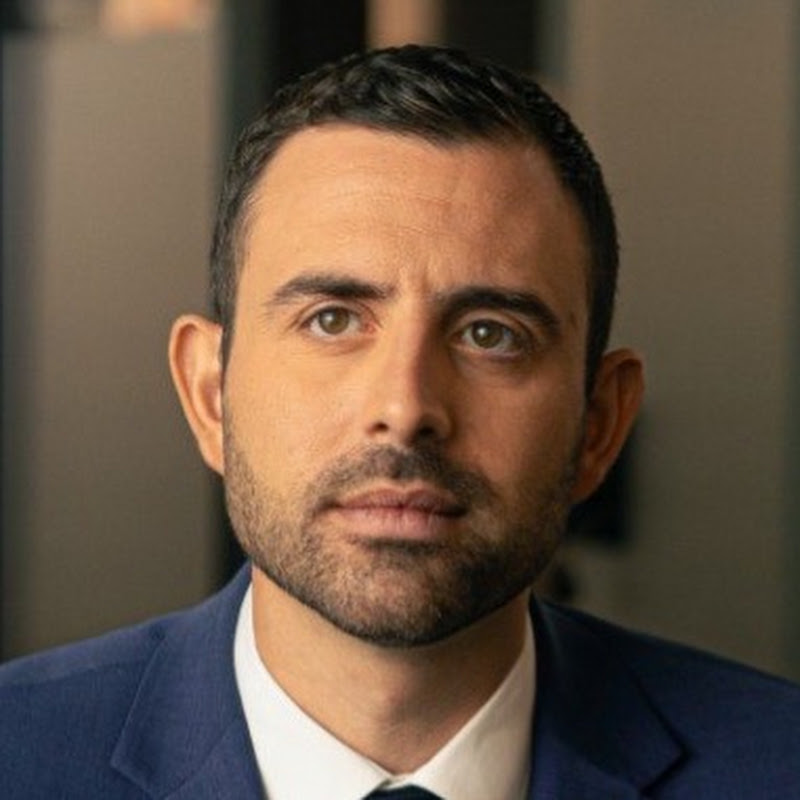
Eylon Levy argues that Britain’s decision to sanction and pressure Israel is damaging a critical strategic partnership and will ultimately embolden Hamas and Palestinian extremists rather than advance peace.
In this tense interview on Times Radio, former Israeli national spokesman Eylon Levy explains:
Why Britain is “picking an entirely pointless fight” with Israel, one of its key strategic partners and a critical supplier of intelligence and defense technology.
Why he believes October 7 killed the two-state solution in the minds of many Israelis, after Israel’s withdrawal from Gaza was followed by a devastating Hamas attack.
Why Britain’s focus on Israeli settlements in the West Bank misses the central issue of Palestinian terrorism and Hamas’s continued popularity.
Why Eylon argues that removing Israeli security forces from the West Bank could allow Hamas to seize control and threaten Jerusalem and Tel Aviv.
Why Britain should focus international pressure on Hamas and reconsider support for UNRWA rather than weakening its relationship with Israel.
The debate over Israel, the West Bank and Gaza reflects a much broader struggle over how to achieve lasting peace in the Middle East. Eylon argues that peace cannot be built by weakening Israel or rewarding extremist forces, but requires confronting terrorism, preventing Hamas from gaining further territory and preserving the security of Israel’s citizens and its democratic allies.
🎯 “October 7th killed the two-state solution.”