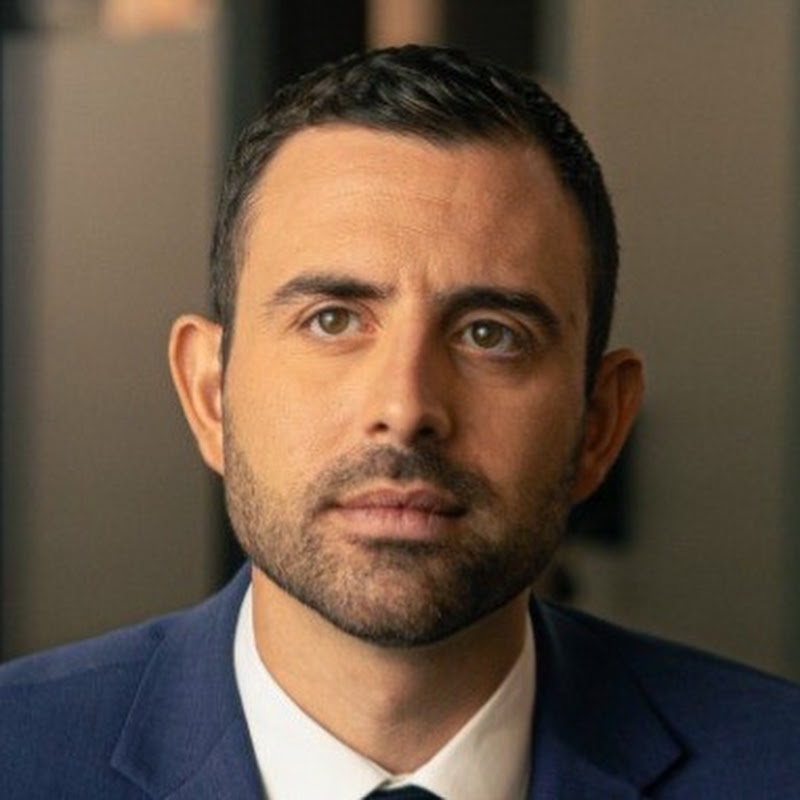
Transcript [00:00] the first national vote since the [00:01] October 7th Hamas attacks, which left [00:03] 1,200 people dead and triggered the [00:05] ongoing war in Gaza. Recent polling puts [00:08] the governing coalition and the main [00:10] opposition block neck and neck. Turnout [00:12] is expected to be pivotal with half a [00:14] million first-time voters eligible to [00:16] cast their ballots and tens of thousands [00:19] flying in from abroad specifically to [00:22] vote. Let's speak to Eylon Levy, the [00:24] former Israeli government [00:25] spoke-spokesperson. [00:27] Eylon, a warm welcome. Thanks for being [00:28] with us. [00:29] >> Hello, Kate. [00:30] >> Um I wonder on the appetite for change [00:32] amongst Israelis and how much that [00:34] threatens the tenure of Netanyahu. [00:38] >> For Israelis who want change, they could [00:40] not be hungrier. These are the first [00:42] elections taking place after the October [00:45] 7th massacre, the first elections after [00:47] the major domestic protests we saw in [00:49] 2023 over the government's judicial [00:52] reform plans. And so for Netanyahu's [00:55] opponents, there really is a feeling [00:56] that this is a make-or-break moment. [00:59] Naftali Bennett himself is calling it [01:01] the last chance to fix Israel and to put [01:05] the country on a stronger, safer, more [01:08] prosperous course. Netanyahu is running [01:12] a very strong fear campaign. Yesterday, [01:14] he published an AI image of a nuclear [01:18] bomb [01:19] blowing up in Tel Aviv, warning that [01:21] only he can save the country from a [01:23] nuclear apocalypse, saying that it is [01:25] too dangerous to put the nation's [01:27] security in the hands of the opposition. [01:30] But for Israelis who think that Israel's [01:32] longest-serving Prime Minister should go [01:34] home, should take responsibility for the [01:36] October 7th massacre, that he's not the [01:38] right man to finish the job on the [01:40] various fronts, there is a real sense of [01:43] urgency in the air. [01:44] >> Mhm. Look, I mean, it's going to be a [01:45] coalition government no matter what, [01:47] isn't it? And so it just depends how [01:49] that coalition is made up. And [01:51] people are critical of those [01:54] hard-right-leaning members of the [01:56] current current government coalition. [01:59] They are critical of approach, although [02:02] it appears that they're picking up [02:04] younger voters. [02:06] What do you make of that? [02:07] >> Yeah, the next election will be the next [02:09] government will be a coalition. It [02:10] always is in Israel. There is a system [02:12] of basically pure proportional [02:14] representation, which means no one has [02:16] ever won a majority. And then we're [02:19] going into this election with two very [02:21] clear blocks. There is Netanyahu's Likud [02:23] with the ultra-Orthodox and far right [02:25] parties against a diverse coalition of [02:28] right-wing centrist left-wing parties [02:31] that are running together to try to [02:33] bring Netanyahu down. It's true that [02:35] first-time voters in Israel are more [02:38] right-wing than the older generation, [02:40] which is unusual around the world. [02:42] >> It is, yeah. [02:43] >> That's a number of reasons. I mean, [02:44] first of all, [02:45] Israeli society is becoming more [02:48] religious. The religious population are [02:50] simply having more children, so it's [02:52] natural that the conservative part of [02:54] the country is growing more rapidly than [02:57] the more secular part of the population. [02:59] But also, this is a nation This is a [03:01] generation of people whose founding [03:03] memory is that 3 years ago a terrorist [03:06] army invaded a music festival to chop [03:08] off heads, tie people to trees, and [03:10] commit barbaric sexual atrocities. This [03:12] is a generation that wants to be really [03:15] tough on security, take absolutely zero [03:18] risks. It did not grow up with the heady [03:22] optimism of the peace movement and the [03:24] belief in the peace process. This is a [03:26] nation that saw our neighbors perpetrate [03:29] the most sadistic atrocities and want to [03:31] be tough against the bad guys, tough [03:33] against the terrorists. And naturally, [03:35] that will support right-wing parties. [03:38] >> Um, a lot of people in Israel blame um, [03:41] the current Israeli Prime Minister [03:43] Netanyahu for that, though. And here's [03:45] the strange disconnect that younger [03:47] people, as you say, for all those [03:49] reasons, are looking at the more [03:51] right-leaning extreme right parties, [03:54] but ultimately, if there's a coalition, [03:56] you'll see the current Prime Minister [03:58] uh, remain in position in a coalition [04:01] with those right-leaning parties. If [04:03] you're going to vote for the [04:03] right-leaning parties, you need to make [04:06] peace with the fact that it will be a [04:07] Netanyahu government, presumably. [04:09] >> Yeah, there is a lot of anger in Israel [04:11] against Netanyahu. Firstly, he was the [04:14] prime minister when this happened. He [04:16] didn't take responsibility, say this [04:18] happened on my watch, I'm going home, [04:19] and he's not setting up a state [04:20] commission of inquiry. The opposition [04:22] parties are saying their first acting [04:24] government will be to establish a state [04:26] commission of inquiry into October 7th. [04:28] So, we work out why it happened and how [04:30] we stop it happening again. But, there's [04:32] also anger against Netanyahu for the [04:34] fact [snorts] that he promised a total [04:35] victory, and the war has loose ends. [04:38] Hamas is still the government of Gaza. [04:41] It is still taxing the food trucks going [04:44] into Gaza to rebuild its war machine. [04:47] The Iranian regime is still threatening [04:49] Israel and still building ballistic [04:51] weapons. So, you know, if many people [04:53] thought that this election would be a [04:56] 1945 [04:57] Churchill might lose end of the war [05:00] post-war, who's going to govern the day [05:02] after kind of election, this is an [05:04] election still in the middle of a war [05:06] about the fateful question of who is [05:08] going to finish the job. And how are we [05:10] going to achieve enduring security for [05:13] Israel when the terrorist armies that [05:16] launched this war 3 years ago are still [05:19] standing, licking their wounds, but [05:20] >> Yeah. [05:20] >> And look, for those for those young [05:22] people who want to back the more [05:24] right-leaning parties, they are not put [05:27] off by the fact that that means they'll [05:28] be cut in coalition with the Likud [05:32] party, with the likely prime minister [05:34] still Benjamin Netanyahu. They're not [05:36] sort of put off with that because that [05:38] is a reality or a or a trade-off that [05:41] they'd have to consider. [05:43] >> Yeah, the the difficulty, I think, is [05:45] not so much the question of [05:47] responsibility for October 7th. One of [05:49] the major questions that's animating the [05:51] youth vote in Israel is the question of [05:54] equality in the burden of defense. [05:57] Israel has, in theory, universal [05:59] conscription for everyone at 18, but the [06:03] Arab citizens of Israel and the [06:04] ultra-Orthodox citizens of Israel do not [06:08] serve in the army. The ultra-Orthodox [06:10] are trying to get a formal exemption [06:12] from military service, claiming a [06:14] religious exemption. Now, for for many [06:17] years that situation was annoying but [06:20] tolerable when Israel wasn't at war. [06:22] Now, we have a whole generation of young [06:24] men who have done literally hundreds of [06:27] days in reserve duty. They've basically [06:29] been press-ganged back into the army [06:31] because the IDF has a serious manpower [06:34] shortage. So, one of the questions [06:36] animating the youth vote in Israel is [06:38] not only security, how are we going to [06:40] be, you know, how are we going to fight [06:41] the terrorists, but who is going to [06:44] shoulder the burden of national defense? [06:46] And how is this country going to [06:48] recognize and reward the citizens who [06:51] bear their duties, serve in the army, do [06:53] reserve duty? And how is it going to [06:57] punish those who decide to evade their [06:59] civic duty and push that burden onto [07:02] other people? So, you know, for for many [07:03] secular Israelis, that question of [07:05] enlistment will be central. And for the [07:07] ultra-Orthodox parties who are part of [07:09] Netanyahu's coalition, they want to make [07:12] sure that they get that formal exemption [07:14] for their young men so they don't have [07:16] to serve in the military and they can [07:18] continue studying in religious [07:19] academies. [07:20] >> So, one side is potentially going to [07:22] going to irk the other even though both [07:24] sides are forming part of that [07:25] coalition. Do you think with the two [07:27] Arab-Israeli parties and because of [07:30] October the 7th and the events since, [07:32] and we can obviously point to what's [07:34] happened in Gaza but also what's [07:35] currently happening in in the West Bank, [07:38] are those Arab-Israelis more motivated [07:41] to vote, do you think? Do you think this [07:43] will look like a different election [07:44] because they they obviously if they if [07:47] they coalesce with Gadi Eisenkot's [07:49] opposition block, there is a chance [07:51] that they'll be much more heavily [07:53] reflected if Eisenkot is is successful? [07:57] >> Yeah, we are definitely expecting to see [08:00] a rise in voter turnout among the Arab [08:03] population inside Israel who largely do [08:06] not like this government and want to [08:08] vote it out. But, the question of [08:09] whether a government can be formed [08:12] together with them or even relying on [08:14] their abstention is a really [08:16] controversial issue in Israel. I mean, [08:18] maybe the the best analogy I could find [08:21] in Britain is, you know, how would [08:22] people feel if Labour forms a coalition [08:25] together with the SNP or Sinn Féin or [08:28] other parties that are not considered [08:30] mainstream [08:31] um system parties that represent [08:34] them. [08:34] >> partners. [08:35] >> Yeah, exactly. So, one of the questions [08:38] when we get the results and the exit [08:40] polls will come out tomorrow night, it [08:42] may take 2 days to get the final results [08:45] because it probably will be close, is [08:48] will that diverse opposition of four [08:51] parties be willing to form a minority [08:54] government with the tacit support of the [08:57] Arab parties? Is that an option to [09:00] displace Netanyahu? Or do they think [09:02] that would be so unpopular that it's not [09:05] a politically feasible option? Yeah, [09:07] exactly. It's a fascinating question [09:08] though. [09:09] >> Yeah, definitely. And in terms of what's [09:11] happening in the West Bank, we know that [09:12] the IDF have announced that all West [09:14] Bank land crossings will be closed [09:16] during Tuesday's um [09:19] election in Israel, which means that [09:21] Palestinian workers will be barred from [09:24] entering all settlements. And the [09:26] actions in Hebron as well, the biggest [09:28] city in the West Bank, [09:30] um where you've got um [09:32] you know, [09:33] issues there, 2,000 Palestinians [09:36] displaced, um Israeli forces taking over [09:39] their homes. There is sort of mass [09:41] action there, which many people are [09:42] criticizing and saying that for [09:43] Netanyahu, it is it is all about the [09:45] optics after those two um Israeli [09:49] security personnel were shot dead by [09:52] Palestinians. What do you make of what [09:54] is happening in the West Bank and the [09:56] optics of that? [09:58] >> Israel is anxious that terrorist groups [10:03] in the West Bank not build serious [10:06] infrastructure to attack Israeli [10:08] communities. There is a fear that the [10:11] next October 7th massacre will not come [10:14] from Gaza, but from the various [10:17] Palestinian terrorist militias in the [10:19] West Bank. And so you are seeing in [10:22] Israel voices saying we need to take [10:25] proactive action against those terrorist [10:28] groups, against the illicit accumulation [10:30] of arms, and not allow the problem to [10:33] grow up and grow and grow, and wait for [10:35] it to explode in our faces with a [10:37] violent attack. There are terrorist [10:39] groups in the West Bank that are [10:41] preparing attacks against Israel. We [10:43] cannot be responsive. We have to go on [10:45] the offensive in order to dismantle [10:47] those militias. [10:50] And Israel will definitely be hoping [10:52] that on election day no one tries to [10:55] carry out a terror attack or exploit the [10:58] fact that the country is in this very [11:00] sensitive moment of election day, and [11:02] and hoping that it goes through without [11:04] any nasty surprises. [11:05] >> And look just briefly, [11:08] some people will say well, yes you can [11:11] although terror attacks are completely [11:13] unacceptable, terror groups are [11:14] unacceptable. Some of the treatment of [11:16] Palestinians in West Bank has fueled [11:20] fueled a dissatisfaction and a rise in [11:23] the likelihood or the or or an increase [11:26] in in the likelihood of a terror attack [11:28] because Israel is provoking it [11:32] by launching attacks on Palestinian [11:35] civilians. I know that [11:37] Israelis have been [11:39] killed as well, but but if you look at [11:41] the proportion of it, many more [11:43] Palestinians are losing their lives. [11:44] There've been some [11:46] heinous actions over there towards [11:48] Palestinians. And that that that lays [11:51] case really to the debate about whether [11:53] Israel is provoking this. [11:57] >> Yeah, I mean it's very difficult to [11:58] respond without a specific example, but [12:00] that analysis would of course be [12:02] divorced from the fact that this is a [12:04] century-long conflict, a century-long [12:06] conflict in which the Arabs have been [12:08] fighting to prevent and overturn the [12:11] existence of a Jewish state in any [12:14] borders whatsoever. We have seen a [12:15] century of attacks to try to prevent any [12:19] Jewish self-determination [12:20] >> about the increase in the last couple of [12:22] years um [12:23] Elon when we've when we've looked at the [12:25] number of attacks on Palestinians and [12:27] the number of attacks on Israelis, the [12:28] number of Palestinian attacks far [12:31] outweighs uh that of Israelis being [12:33] attacked. Um and there's the issue here [12:35] of the E1 settlement and what many [12:38] people feel is unfair claiming of land [12:41] by Israel and all the political [12:42] complexities of that. [12:44] >> Yeah, [12:45] you've mentioned several issues. Of [12:47] course, there's a difference between the [12:49] hilltop youth running riot and [12:51] committing acts of vigilante violence [12:54] and the construction of a housing [12:56] project on the outskirts of Jerusalem. [12:58] Those are very different uh very [13:00] different issues. The opposition in [13:02] tomorrow's election is saying we are [13:04] absolutely going to crack down on this [13:06] vigilante violence, that breakdown of [13:09] law and order is completely unacceptable [13:12] to us. We're going to crack down on [13:13] that. It's [13:14] our interest to maintain peace and [13:17] stability and avoid any sort of [13:19] unnecessary escalation, but at the same [13:21] time, we're not losing sight of what [13:23] this conflict is about, which is that [13:26] the Palestinian national movement and [13:27] the terrorist uh movements that act in [13:29] its name are determined to destroy the [13:32] state of Israel from the river to the [13:34] sea as they chant in those protests, and [13:36] we have to take tough action to protect [13:39] our security and our sovereignty. [13:41] >> Look, thank you for being with us. [13:42] Really appreciate your time. Elon Levy [13:44] there, the former Israeli [13:45] >> Huge huge question. I think it deserves [13:46] a whole a whole interview just to unpack [13:48] that question. [13:48] >> Yeah, no, I know and it's and it's [13:50] tricky because we're doing this all in [13:51] light of the Israeli elections and [13:53] you're right about West Bank and what is [13:54] happening there being worth a completely [13:56] separate conversation, but I thought it [13:58] was important to mention it because of [13:59] course it is it is an important context [14:02] in these elections. So, I I thank you [14:04] for being able to answer that with [14:06] brevity. No doubt more conversations on [14:08] those Israeli elections they take place [14:10] tomorrow. Elon Levy is a former Israeli [14:12] government spokesperson. Coming up, a [14:14] report revealing just how close Britain [14:16] was. In fact, that is not correct. [14:19] Coming up, we'll discuss we'll hear from [14:21] Aaron Banks, the former former current [14:24] bad boy of Brexit, who knows. [14:26] He'll be discussing the EU with us. And [14:28] we'll also talk about energy bills